


Page 30 - Sports Energy News, Cornwall, Issue No 134
P. 30
30 Issue #134 March 2024 www.sportsenergynews.com
Let it Grow - Let me be wild, let me be free.
Planting Wildflowers
packets contain (possibly) invasive
By Marion Dalley
species, which can outpace the
he look of the traditional garden native plants, wreaking havoc for the
Tis changing. Many are opting garden and areas beyond. A packet of
to convert from the neatly planted wildflower seeds should only include
rows of flowers to a more wild and seeds of native or naturalized plants
free arrangement of mixed varieties. and should not include horticultural
A wildflower garden can be planted selections, hybrids, or cultivated
almost anywhere, as a complement to varieties. Ideally, the seed mix would
a more formal garden, or to replace be specific to a particular region. In
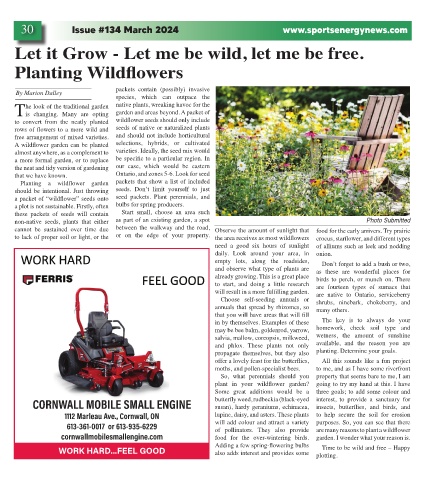
the neat and tidy version of gardening our case, which would be eastern Photo Glen Finbow
that we have known. Ontario, and zones 5-6. Look for seed
Planting a wildflower garden packets that show a list of included
should be intentional. Just throwing seeds. Don’t limit yourself to just
a packet of “wildflower” seeds onto seed packets. Plant perennials, and
a plot is not sustainable. Firstly, often bulbs for spring producers.
these packets of seeds will contain Start small, choose an area such
non-native seeds, plants that either as part of an existing garden, a spot Photo Submitted
cannot be sustained over time due between the walkway and the road, Observe the amount of sunlight that food for the early arrivers. Try prairie
to lack of proper soil or light, or the or on the edge of your property. the area receives as most wildflowers crocus, starflower, and different types
need a good six hours of sunlight of alliums such as leek and nodding
daily. Look around your area, in onion.
empty lots, along the roadsides,
Don’t forget to add a bush or two,
and observe what type of plants are as these are wonderful places for
already growing. This is a great place birds to perch, or munch on. There
to start, and doing a little research
are fourteen types of sumacs that
will result in a more fulfilling garden. are native to Ontario, serviceberry
Choose self-seeding annuals or
shrubs, ninebark, chokeberry, and
annuals that spread by rhizomes, so many others.
that you will have areas that will fill
in by themselves. Examples of these The key is to always do your
homework, check soil type and
may be bee balm, goldenrod, yarrow,
salvia, mallow, coreopsis, milkweed, wetness, the amount of sunshine
available, and the reason you are
and phlox. These plants not only
propagate themselves, but they also planting. Determine your goals.
offer a lovely feast for the butterflies, All this sounds like a fun project
moths, and pollen-specialist bees. to me, and as I have some riverfront
So, what perennials should you property that seems bare to me, I am
plant in your wildflower garden? going to try my hand at this. I have
Some great additions would be a three goals; to add some colour and
butterfly weed, rudbeckia (black-eyed interest, to provide a sanctuary for
susan), hardy geraniums, echinacea, insects, butterflies, and birds, and
lupine, daisy, and asters. These plants to help secure the soil for erosion
will add colour and attract a variety purposes. So, you can see that there
of pollinators. They also provide are many reasons to plant a wildflower
food for the over-wintering birds. garden. I wonder what your reason is.
Adding a few spring-flowering bulbs Time to be wild and free – Happy
also adds interest and provides some
plotting.

